Annie Leibovitz is tired and nursing a cold, and she' s just flown back to New York on the red-eye from Los Angeles, where she spent two days shooting Angelina Jolie for Vogue. Like so many of her photo sessions, there was nothing simple about it. "I talked with Angelina before the shoot," says Leibovitz, who's famous for her preparation. "She felt like she was coming back from having the baby and she felt very sexy and ready to go." Jolie, a pilot, suggested shooting on an old airfield near the desert, with motorcycles and small planes among the props. (She flew herself to the location and the next day, Brad Pitt buzzed up in his plane.) They also spent a day shooting in the dunes near Death Valley, where the mercury hit 104, and the wind whipped so hard that everyone was peppered with sand. There were 50 people on the set, and racks of clothes from the New York spring collections to be tried and styled. It was as if Leibovitz were directing a small movie.
Even for America's foremost celebrity photographer, it's been a busy couple of months—starting with the interruption of her August vacation to shoot that elusive Hollywood infant, Suri Cruise, for the cover of Vanity Fair. You might think, after a career spent photographing divas and presidents, that taking pictures of a cute little baby would be a ... snap. But no. "It's very hard when the baby is that small," says Leibovitz. "It's being held by the parents all the time. It's not really connecting to anything else." She spent the better part of two weeks capturing 3-month-old Suri's waking moments with Tom Cruise and Katie Holmes, at Cruise's homes in L.A. and Telluride, Colo. Though Leibovitz had less control over her tiny subject than she's used to, she did manage to direct the now ubiquitous cover shot of Suri, inspired by Linda McCartney's famous picture of Paul with their firstborn wrapped in his jacket—which she calls "one of my favorite pictures of a father holding a baby."
A nice homage—but it's usually Leibovitz who's inventing the iconic shot. What other contemporary photographer has produced as many indelible images of American pop culture? You know these pictures, from Whoopi Goldberg in the milk bath, to a nude and very pregnant Demi Moore, to the most famous picture of all: John Lennon, bare as a baby, curled around Yoko Ono, taken hours before he was killed. (The American Society of Magazine Editors recently voted the Lennon and Moore covers, which graced Rolling Stone and Vanity Fair respectively, the No. 1 and 2 magazine images of the past 40 years.) Leibovitz has become the master of the highly theatrical portrait, carefully staged in elaborate settings with witty props—pictures that have often come to define the image of her sitters.
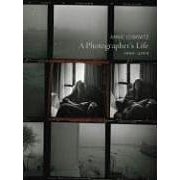
While manipulating this world of polished glamour, Leibovitz has mostly remained hidden; the camera, she has said, is a protection. Now, in a surprising new collection of her work, "A Photographer's Life: 1990-2005," Leibovitz, 56, is getting personal. Interspersed among the famous subjects are pictures of her extended family (she is one of six siblings), her own three young children and the person she was closest to for that decade and a half—the late writer and critic Susan Sontag. Here's a photographer with an uncanny knack for getting people to take off their clothes, finally going naked herself—not just literally, but in throwing open a window on her private life. Her fans may be astonished both by the range of the work and the unstudied, everyday quality of some of the images—a family day at the beach, a newborn in the delivery room. She occasionally presents a grid of four pictures from the same sequence—some shots even out of focus—to show us a sliver of life on the move, rather than a moment of frozen perfection. "It's so much more than what a single picture can say," she maintains—a notion that's the antithesis of what the great French photographer Henri Cartier-Bresson famously called "the decisive moment."
What may be the most controversial aspect of Leibovitz's book is the intimate pictures from her relationship with Sontag, and particularly the painful images of the writer when she was seriously ill with cancer. The two first met in the late '80s, when Leibovitz photographed her for a book jacket. They never lived together, though they each had an apartment within view of the other's. But their many trips—to Paris, Venice, Capri, the Nile, the ruins of Petra in Jordan—are recorded here. Sontag, the author of the award-winning book of criticism "On Photography," wasn't easy on Leibovitz: "She thought I was good—and that I could be better. And I wanted to be a better photographer. She sort of raised the bar and made me feel I needed to take control." Because of Sontag, Leibowitz went to Sarajevo during the Bosnian war, where she shot such powerful pictures as that of a child's bike lying in a road smeared with blood. But Sontag also loved pop culture. When Tina Brown, then editor of Vanity Fair, seemed to hesitate over printing the pregnant Demi Moore pictures, Sontag called her to say how great they were. "Susan was so entrenched in life, I couldn't keep up with her," says Leibovitz. "She was just bigger than everything."
Sitting in her Greenwich Village office, wearing jeans and sneakers, Leibovitz explains how Sontag's death in December 2004—followed only weeks later by the death of Leibovitz's father—propelled her to make this book. "It totally came out of a moment," she says. "I had already done some looking at photographs of Susan—that was very hard—for a little memorial book. I had never taken the time to see what I had, really." She would weep and pin the pictures up on the long walls of an old barn at her country place in upstate New York. "And then, I got very excited, trying to look from 1990 to 2005, as if Susan was standing behind me." Leibovitz tears up and reaches for a box of tissues.
She struggled over whether to publish the few photos from Sontag's last weeks of life. "They are very tough pictures," she says. "People have said it's important to publish them because so much is masked from us about what the end really is." Leibovitz starts to choke up again. "I think Susan would really be proud of those pictures—but she's dead. Now if she were alive, she would not want them published. It's really a difference. It's really strange." Later, collecting her thoughts, she says, "I've been through everything mentally and emotionally, and I'm very comfortable with them. This book is me."
Most powerful may be the image of Sontag in death, a photograph that evokes a 19th-century memento mori. In counterpoint are the pictures of Leibovitz's own children. She gave birth as a single mother to her daughter Sarah just after 9/11. Then, a few months after Sontag and Leibovitz's father died, her twin girls were born, via a surrogate mother. She named one Susan and the other Samuelle, after her dad. "I saw my life with Susan, my life with my family, I saw the birth of my children," she recalls of looking at all the pictures together. "I was mesmerized by the personal stuff. I just loved it."
Leibovitz's book also provides a comprehensive view of the public side of a photographer of legendary ambition and tenacity. Her well-known subjects describe her as a perfectionist who will do almost anything to get the picture she wants. "She has this kind of burning focus," says Roseanne Cash, who's been photographed by Leibovitz several times—once on a beach in Maine in December when it was 3 degrees below zero. "She arrives at a shoot with all these people," says Mikhail Baryshnikov. "It's very intense—absolutely intense!" If time allowed, Leibovitz would spend two or three days around a portrait subject first, just getting ideas. Despite the meticulous planning, the perfect image can come out of the blue. Take Leibovitz's Jack Nicholson picture. Whenever she was busy setting up a shot inside his Mulholland Drive house, he'd disappear out back to drive golf balls—and that became the photograph. And believe it or not, she didn't intend to shoot Bill Gates at his computer—but it was where she found him when he wandered away from her lights.
It may be her perfectionism that makes Leibovitz question her own work. "I'm not a great studio portraitist," she says in the book's introduction. That accolade she reserves for such photographers as Richard Avedon. "His work is a great reminder about trying to be simple and strong," she says. Avedon knew how to talk to his subjects and "get them animated, or thinking about anything but having their picture taken."
Leibovitz, on the other hand, likes to look rather than converse. "I'm still learning how to make the portrait more alive," she says. Early in her career—she started working for Rolling Stone back when it was based in San Francisco—she might spend days or weeks on the road with a band, taking pictures behind the scenes; but the more formal shots for the magazine's cover were different. "It wasn't like life as it was happening—my portraits started to feel like after the decisive moment," she says, laughing. "I made myself feel a little better by saying it's the studied moment." As her magazine work has become more elaborate, Leibovitz seems to long for the feeling of reportage. "It would be nice once in a while to do some Life Magazine real-world imagery instead of making it up all the time," she says. She cites a favorite recent shoot with Anderson Cooper in New Orleans after Katrina. "I do work for one of the largest magazine conglomerates in the world [Condé Nast, publisher of Vanity Fair and Vogue], and they have an agenda for me," she notes. "I'm trying to work within that and still try to do good work." In the end, what matters to her most is not any individual picture. "I've always thought the strength of my work has been in the body of the work."
Thanks to that success as a documentarian of our culture, Leibovitz has had the means to become a serious collector of photographs—by Robert Frank, Nan Goldin and of course Avedon. But the very first photograph she bought was by Cartier-Bresson, the famous image "On the Banks of the Marne." Yes, it's a beautiful composition—a decisive moment. But it also reflects what's perhaps an ideal for a photographer so associated with the artifice of celebrity: a picture of an anonymous family on a riverbank, having a picnic. What it looks like most is life as it's happening.
With Jac Chebatoris
"A Photographer's Life: 1990-2005" By Annie Leibovitz. To be published by Random House Publishing Group, a division of Random House, Inc. © 2006 by Annie Leibovitz.